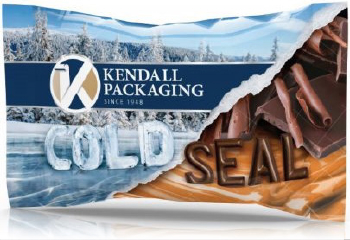
In high-volume flexible packaging, the right seal method can make a major difference in production efficiency, product quality, and customer experience. For many food and consumer packaged goods applications, cold seal packaging offers a strong alternative to traditional heat seal structures – especially for heat-sensitive products.
Cold seal packaging uses a pressure-sensitive adhesive that bonds to itself when pressure is applied, requiring no heated sealing jaws to activate the seal. That difference may sound simple, but it can have a major impact on line speed, energy use, product protection, and brand presentation.
Cold Seal vs. Heat Seal: What’s the Difference?
Heat seal packaging relies on heat, pressure, and dwell time to create a bond. It is a proven and widely used method, but because heat is part of the process, lines need time to reach and maintain the correct temperature, and certain products may be vulnerable to quality issues as a result.
Cold seal is activated by pressure rather than heat, eliminating the heating and cooling cycle. For manufacturers producing large volumes of individually wrapped products, that speed advantage can translate into higher throughput, reduced downtime, and more efficient production.
When Cold Seal is the right fit
Cold seal protects the integrity of the product inside the package without applying heat. Chocolate, confectionery, coated bars, protein bars, granola bars, frozen novelties, baked goods, and similar flow-wrapped products can be sensitive to elevated temperatures during packaging. Heat exposure may contribute to bloom, softening, deformation, or sticking; issues that affect both product quality and the consumer’s first impression of your brand. A clean, consistent, well-sealed wrapper helps communicate quality, care, and reliability.
Cold seal is also a strong option for brands scaling production who need faster packaging speeds without sacrificing product presentation.
When Heat Seal Still Makes Sense
Cold seal is not always the automatic answer. Heat seal remains the right choice for many applications, especially where high seal strength, specific barrier requirements, chemical resistance, or specific material structures are needed. The best solution depends on the product, package format, production environment, equipment, shelf-life goals, and distribution requirements.
That is why it is important to evaluate both cold and heat seal options as part of a complete packaging strategy rather than choosing based on seal method alone.
“Every product has its own set of requirements, and the seal method is just one piece of the puzzle,” said Trung Nguyen, Director of Technical & Quality. “Our team takes the time to understand the full picture – the product itself, the packaging equipment, and the performance goals, so we can recommend a structure that truly supports what our customers are trying to achieve.”
The Bottom Line
The right seal method comes down to your product, your line, and your performance goals. At Kendall Packaging, we work closely with customers to identify the right flexible packaging structure for each application, evaluating the product, packaging line, performance requirements, and brand goals. Contact the Kendall Packaging team today to discuss your next project and help guide you toward the right flexible packaging structure for your application.